African Animal Faces Clipart Safari: A Designer's Wild Asset
When you're building a brand or a creative project, the right visual element can make all the difference. It’s not just about decoration; it’s about communicating a specific feeling, personality, and story instantly. For projects that need a touch of the wild, the playful, or the authentically natural, generic icons often fall flat. They lack character and fail to connect. This is where a thoughtfully curated set like the African Animal Faces Clipart Safari becomes a practical tool in your design arsenal, offering a burst of personality that stock libraries rarely match.
More Than Just Animal Pictures: The Personality of the Set
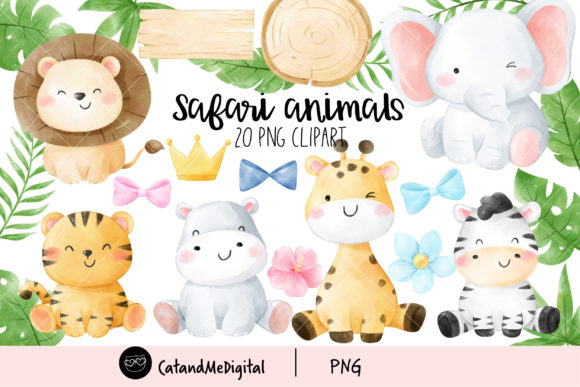
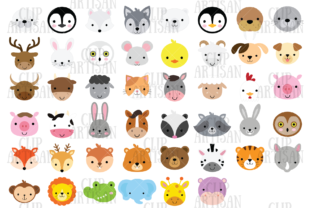
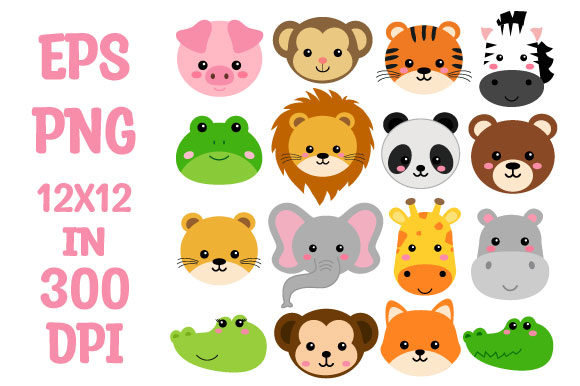
At first glance, this is a collection of 16 animal faces—a crocodile, elephant, giraffe, hippo, lion, lioness, monkey, tiger, pig, panda, frog, bear, and zebra. But the value lies in the execution. The illustrations carry a distinct, friendly, and slightly whimsical style. They’re not hyper-realistic, which makes them incredibly versatile. Instead, they strike a balance that feels approachable and modern. The lines are clean, the expressions are full of character (the lion looks regal, the frog looks curious), and the overall aesthetic is cohesive. This consistency is critical. When you use multiple assets from the same set, you avoid the jarring, patchwork look that can undermine a professional project. It’s a complete design asset package, providing not just individual images but a unified visual language.
Practical Applications: Where This Clipart Truly Roars
The real test of any creative asset is its utility. The African Animal Faces Clipart Safari set, delivered as high-resolution 300dpi PNGs with transparent backgrounds and an EPS file, is built for real work. The transparent PNGs are perfect for layering—a designer’s best friend. You can drop a giraffe face onto a patterned background for a packaging design, or place a series of animals in a grid for a dynamic social media graphics template. The EPS vector file offers scalability, meaning you can enlarge a hippo face for a trade show banner or reduce a monkey face for a tiny favicon without any loss of quality. This flexibility bridges the gap between digital and print needs seamlessly.
For entrepreneurs and small business owners, think about brand identity and logo design. A child-focused brand, a pet shop, an eco-tourism company, or a safari-themed event could use a simplified animal face as a mascot or a supporting brand mark. The set provides options—maybe the elephant is your primary mark, and the zebra and giraffe become secondary icons for different service categories. For bloggers and content creators, these faces can become signature elements. Imagine a nature blog where each post category is represented by a different animal face, or a recipe site where the "wild" section uses the lion. It adds a layer of recognizable, engaging visual storytelling.
In editorial design and publishing, the applications are equally rich. A children's book illustrator could use these faces as starting points for characters. A magazine layout about wildlife conservation could use them as pull quotes or section dividers. For marketers, they can break the monotony of standard corporate graphics in presentations, infographics, or email newsletters, especially for campaigns with a playful or educational angle. Crafters and hobbyists will find them ideal for scrapbooking, custom stickers, printable wall art, or party decorations. The key is to see them not as "just clipart," but as modular components for building a cohesive visual system.
Integrating the Set: Guidance for Effective Use
Acquiring the asset is step one. Using it effectively is where your skill comes in. First, evaluate the project fit. This style is friendly, modern, and illustrative. It won’t suit a project requiring ultra-serious, photorealistic imagery. But for anything aiming for warmth, approachability, or a bit of fun, it’s a strong candidate. Next, consider visual hierarchy. A large lion face can be a powerful hero image on a landing page. Smaller, repeated faces can create a pattern or a border. They naturally draw the eye, so use them to guide attention to key information.
Font pairing is a crucial consideration, even with clipart. The playful nature of these animals pairs well with certain typefaces. A clean, modern sans serif font like Montserrat or Poppins can provide a balanced, readable counterpart. For a more whimsical feel, a friendly handwritten font could work for headlines, but ensure body text remains highly legible. A sturdy serif font like Lora could add a touch of unexpected classicism, creating an interesting contrast. The goal is to let the clipart and the typography complement each other without competing. Test your pairings by placing a headline with the animal art to see if the overall tone feels right.
Finally, think about consistency and professionalism. Use the animals in a consistent way across your project. If you use them with a white outline on a dark background in one place, maintain that treatment. This builds brand recognition. The high-resolution files ensure your work looks crisp and professional, whether it's printed on a business card or displayed on a retina screen. While the set is licensed for commercial use, always double-check the specific terms for your intended application, especially for large-scale distribution or product resale. The African Animal Faces Clipart Safari is a versatile toolkit; your strategic application is what will make it truly work for your audience, turning a charming illustration into a meaningful part of your visual communication.